


The ERP Shift Nobody Saw Coming
There was a time when buying an ERP system meant your business had “made it.” You had a single platform to capture purchase orders, manage inventory, run payroll, and generate monthly reports. That was enough, because data collection was the hard part.
In 2026, data collection is the easy part. Every machine, every transaction, every shipment generates data automatically. The hard part, the part that separates growing businesses from struggling ones, is what you do with that data in the next 60 seconds.
Traditional ERP systems were built to record. Modern manufacturing and distribution businesses need systems that think. That’s the ERP shift. And if your ERP is still handing you a report instead of a recommendation, you may already be falling behind.
What Is an AI-First ERP?

An AI-First ERP isn’t just an old ERP with a chatbot bolted on. It is a platform where artificial intelligence is embedded into the core decision-making layer, not as a feature, but as the engine.
Here’s what that actually looks like in practice:
Predictive Analytics go beyond showing you what happened last month. They analyze historical patterns, seasonal trends, supplier behaviour, and market signals to tell you what is likely to happen next week, before it disrupts your operations. Instead of reacting to a stockout, you prevent it.
Real-Time Anomaly Detection monitors your operations continuously and flags deviations the moment they occur. A production batch running 12% above scrap norms? An invoice amount that doesn’t match the purchase order? An AI-First ERP catches these exceptions automatically and alerts the right person, not 48 hours later during a review meeting, but in real time.
Automated Decision Suggestions move beyond dashboards. Rather than presenting you with 15 charts and leaving you to figure out the next step, an intelligent ERP provides next-best-action recommendations. It tells your purchase manager that Supplier A has a 94% on-time delivery rate while Supplier B has been slipping, and suggests placing the critical order accordingly.
This is the difference between a system that stores intelligence and one that delivers it.
Why Traditional ERP Is Failing SMEs in India

Small and medium enterprises in India have invested significantly in ERP adoption over the past decade. Yet many are discovering a painful truth: their ERP has made them more organised, but not necessarily more intelligent.
Static Dashboards That Tell You What, Not Why
Most traditional ERP dashboards are retrospective. They show you revenue last quarter, inventory levels right now, and pending orders this week. But they cannot tell you why your margins dipped in March, or what is most likely to cause a delivery delay next month. Decision-makers are left connecting dots manually — a time-consuming and error-prone process.
No Forecasting Capability
Traditional ERP systems operate on fixed logic: reorder when stock falls below X units. This works in stable, predictable environments. It fails catastrophically in volatile ones, during seasonal spikes, supply chain disruptions, or rapid demand shifts. Without forecasting powered by machine learning, businesses are perpetually reactive.
Delayed Insights That Arrive Too Late
By the time a weekly MIS report lands in a manager’s inbox, the problem it describes has already cost the business money. A machine that was running inefficiently for three days. A customer payment that slipped past the due date unnoticed. A quality deviation that affected an entire production batch. Traditional ERP catches these things after the fact. AI-First ERP catches them as they happen, or before.
For Indian SMEs competing in increasingly cost-sensitive, quality-conscious markets, this lag in insight is not a minor inconvenience. It is a structural competitive disadvantage.
How AI Transforms Manufacturing & Distribution Operations

When AI is layered into an ERP purpose-built for manufacturing, the operational improvements are measurable and specific.
Demand Forecasting That Actually Works
Rather than relying on last year’s sales data alone, an AI-enabled ERP analyses multiple variables — seasonal patterns, customer order histories, market signals, and production lead times — to generate accurate demand forecasts. This directly reduces both overstocking (which ties up working capital) and stockouts (which lose you orders). For auto component manufacturers, EV makers, and FMCG distributors, this kind of precision can meaningfully shift margins.
Inventory Optimisation Across Locations
For businesses running multi-location operations, keeping the right inventory in the right warehouse at the right time is a constant juggling act. AI-driven inventory management uses real-time stock data combined with predictive demand to dynamically balance inventory across locations — reducing holding costs while maintaining service levels.
Predictive Maintenance to Eliminate Unplanned Downtime
Unplanned equipment downtime is one of the most expensive events in a manufacturing plant. It disrupts production schedules, delays deliveries, and damages customer relationships. Predictive maintenance — powered by continuous sensor data analysis — identifies equipment health deterioration before it becomes a breakdown. Maintenance is scheduled proactively, not triggered by an emergency.
The compounding effect of these three improvements — better forecasting, leaner inventory, less downtime — is a manufacturing operation that costs less to run and serves customers more reliably. That is what AI in ERP looks like when it’s working.
How Tanaashi Enables AI-Layered ERP for Indian Manufacturers
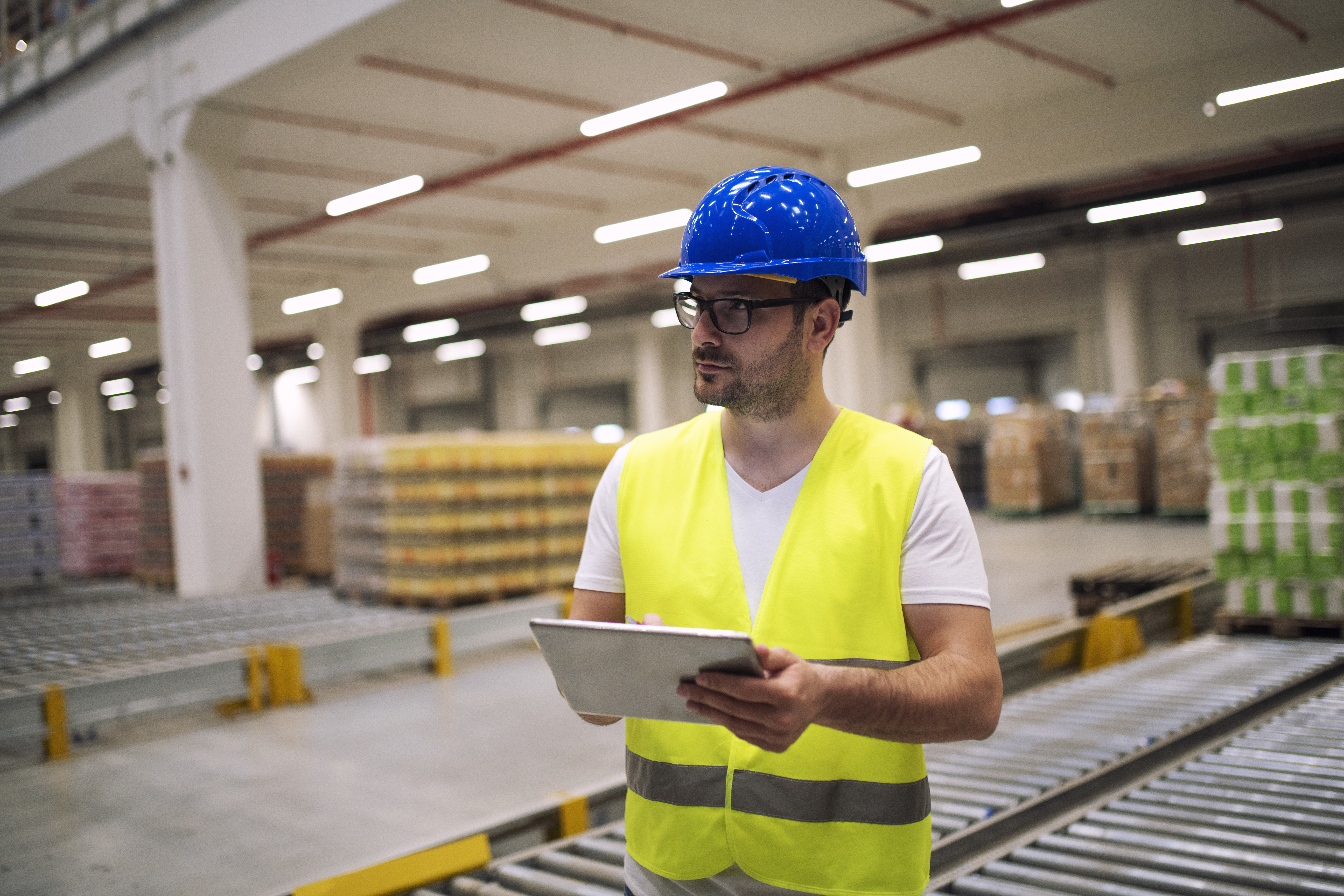
Tanaashi Technologies has built its platform around a clear belief: Enterprise data should be on your fingertips, not locked in a report. Their suite of products — DigiSec ERP paired with the AI.Tanaashi intelligence layer — is designed specifically for manufacturing and distribution SMEs in India, with deep vertical expertise across auto components, EV manufacturing, forging, footwear, and more.
Here is how Tanaashi’s AI-layered approach works in practice:
DigiIQ — Conversational Data Intelligence
DigiIQ is Tanaashi’s conversational AI agent for production-line data. Instead of navigating dashboards or waiting for an analyst, a plant manager can simply ask — in plain language — “Why did our rejection rate spike on Line 3 last Tuesday?“ or “Which purchase orders are most at risk of delay this week?“ DigiIQ returns instant, narrative answers along with next-best-action recommendations.
This means:
- Natural language queries on live production data
- Root cause analysis surfaced automatically
- Live KPI alerts without manual monitoring
- Multilingual support for diverse teams
- Predictive analytics embedded in the conversation
No SQL. No waiting for the IT team. Just ask — and act.
DigiForce — Document Automation That Feeds Your ERP
One of the hidden productivity drains in manufacturing operations is manual data entry: reading MRNs, keying in QC logs, transferring invoice data between systems. DigiForce agents read scanned and digital documents — MRNs, production entries, invoices, quality certificates — and automatically structure and validate the data before pushing it directly into the ERP via APIs. With 98.5%+ accuracy and a human-in-the-loop approval step for critical transactions, DigiForce dramatically reduces administrative overhead while keeping data integrity intact.
DigiSec ERP — The Intelligent Foundation
The DigiSec ERP itself is built as an Industry 4.0-compliant platform with AI-based data insights at its core. Key capabilities relevant to manufacturing intelligence include:
Intelligent Dashboards & Triggers: Configurable dashboards powered by Tableau give decision-makers the precise view they need, not a generic report template. Automated MIS report scheduling ensures stakeholders receive timely updates without manual intervention.
Real-Time Anomaly Alerts via WhatsApp & Email: DigiSec ERP’s multi-level notification system sends critical alerts and approval requests directly via WhatsApp and email. Exceptions don’t sit in a queue; they reach the right person instantly.
Plant Equipment Maintenance with Predictive Analytics: The equipment maintenance module continuously tracks asset health, predicts failure risks, and schedules maintenance proactively. This is predictive maintenance built natively into the ERP, not as a third-party add-on.
Quality Control with Variance Detection: The quality module monitors production at each stage, detecting variances early and triggering rectification workflows automatically, reducing wastage and protecting delivery commitments.
MRP to Production with 24/7 Inventory Visibility: The DigiSec MRP engine provides round-the-clock visibility over inventory, both on hand and in the pipeline, enabling informed decisions in response to changing demands, not just periodic planning cycles.
Is Your ERP Giving You Data or Intelligence?
Every ERP system stores data. Not every ERP system knows what to do with it.
In 2026, the gap between a system that records and a system that thinks is not a luxury gap — it is a survival gap. Indian manufacturers and distributors face tightening margins, demanding customers, and supply chains that shift faster than any weekly report can track. The businesses that will grow in this environment are those whose ERP tells them what to do before the problem becomes a crisis.
The question is not whether AI will change how ERPs work. It already has. The question is whether your business will capture that advantage now or spend the next two years watching competitors who did.
Is your ERP giving you data — or intelligence?
If you are ready to find out what an AI-layered ERP can do for your manufacturing or distribution operation, book a free consultation with Tanaashi or explore the DigiSec ERP platform.